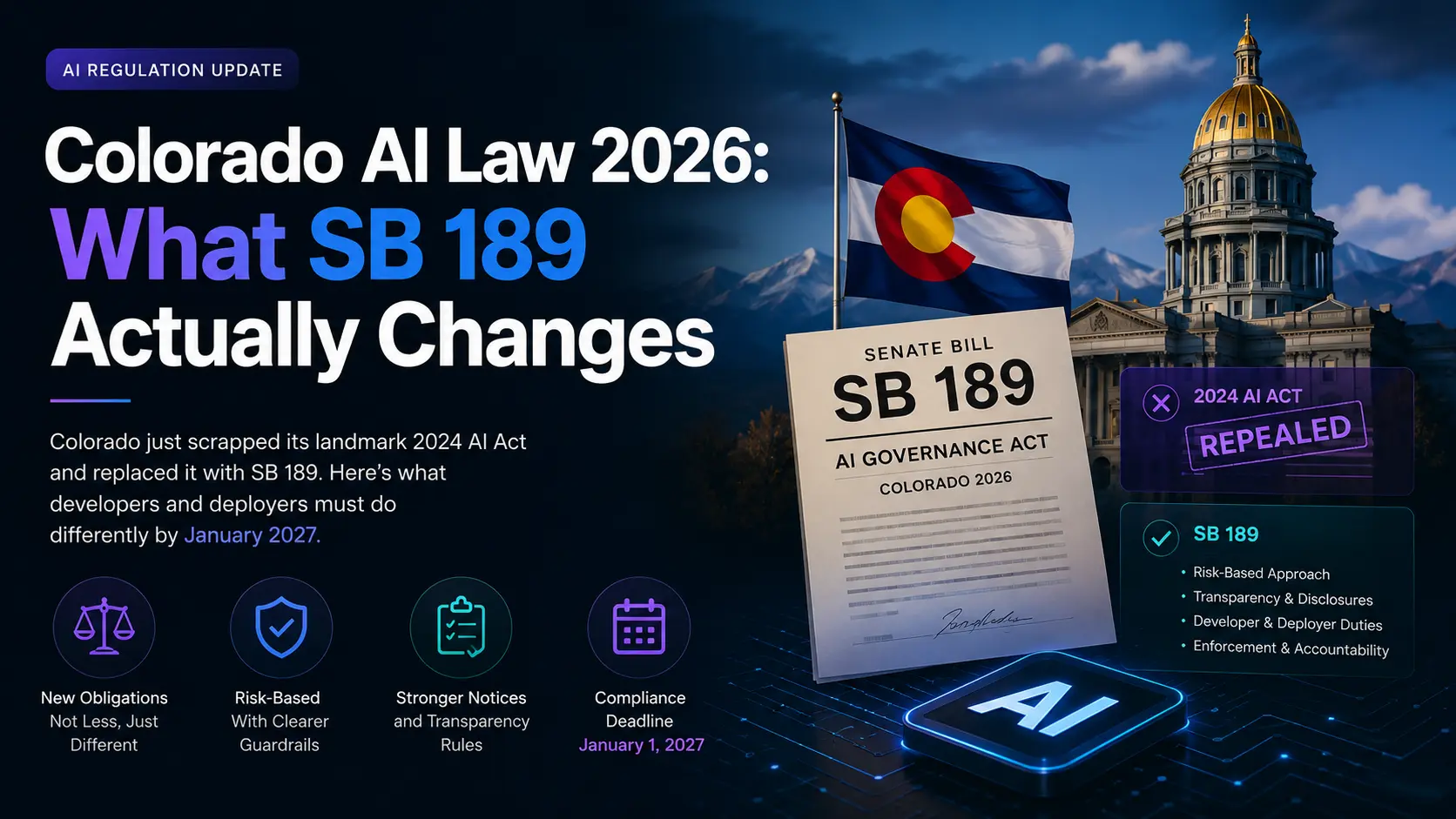
Colorado AI Law 2026: What SB 189 Actually Changes
Colorado just scrapped its landmark 2024 AI Act and replaced it with SB 189. Here's what developers and deployers must do differently by January 2027.
Follow AI governance coverage spanning the EU AI Act, agent security, governance frameworks, and compliance operations.
AI governance is where policy, product, and security finally collide. This hub groups governance framework articles, compliance update tracking, agent-security and oversight coverage, bias detection and monitoring systems, and practical operationalization guides. Creates a stronger authority node for safe AI deployment, bridges high-level governance strategy with concrete compliance deadlines, and surfaces agent-security content alongside policy explainers to build trust signals for regulation-heavy coverage.
AI governance in 2026 is no longer a slide deck — it is a set of engineering and process requirements with legal deadlines attached. The EU AI Act's high-risk obligations apply from August 2, 2026. Agent deployments are giving AI systems the ability to act, not just generate text. And procurement teams increasingly ask vendors for documented AI risk management before signing. This hub connects the policy landscape to the operational work: frameworks, controls, monitoring, and the audit trail that proves you did what you said.
European Union: The EU AI Act (Regulation 2024/1689) is the world's most comprehensive AI law. Prohibited-practice bans and AI-literacy duties took effect in February 2025; obligations for general-purpose AI models followed in August 2025; the high-risk system requirements — risk management, data governance, human oversight, logging, conformity assessment — apply from August 2, 2026. Penalties scale to €35 million or 7% of worldwide turnover for prohibited practices.
United Kingdom: The UK continues a regulator-led, principles-based approach rather than a single AI statute, with sector regulators applying cross-cutting principles (safety, transparency, fairness, accountability, contestability) and the AI Safety Institute focusing on frontier-model evaluation.
United States: Federal policy remains fragmented across executive actions, agency guidance, and sector regulators, with NIST's AI Risk Management Framework serving as the de facto reference standard. State laws — particularly around automated employment decisions and consumer protection — fill the gap, so multistate compliance mapping matters more than any single federal rule.
Japan: Japan has favored a light-touch, innovation-friendly framework that leans on existing law and voluntary guidance, while tightening expectations for transparency and risk management in higher-stakes deployments.
The practical consequence: a company operating internationally should build to the strictest applicable regime — usually the EU AI Act — and treat other jurisdictions as subsets.
Three reference frameworks cover most needs:
NIST AI Risk Management Framework (AI RMF): Organized around four functions — Govern, Map, Measure, Manage. Voluntary, but widely cited in US procurement and a sensible backbone for any program: it forces you to inventory systems, identify risks, quantify them, and assign ownership.
ISO/IEC 42001: The international management-system standard for AI, certifiable in the same way ISO 27001 is for security. Increasingly requested in enterprise procurement because it gives buyers an auditable third-party signal.
OWASP Top 10 for LLM Applications: The security-engineering complement. It catalogs the failure modes specific to LLM systems — prompt injection, insecure output handling, training-data poisoning, excessive agency, sensitive-information disclosure — and concrete mitigations for each.
A workable program maps: NIST/ISO for the management layer, OWASP for the technical-controls layer, and the EU AI Act (or your strictest regulator) for the legal-requirements layer.
Agentic systems change the governance problem. A chatbot that produces a wrong answer creates a content problem; an agent with tool access that takes a wrong action creates an operational incident. Controls that matter specifically for agents:
For systems making or supporting decisions about people — hiring, lending, access to services — bias testing is both an ethical control and, in the EU, a legal one:
Evaluation infrastructure is the unglamorous core of governance: versioned test sets, regression suites for model and prompt changes, and dashboards that someone is actually accountable for watching.
Q: We're a small startup — how much of this applies to us? A: Scale the depth, not the structure. Even a five-person team can keep a system inventory, a one-page risk note per system, and logging on anything that touches customers. The EU AI Act also applies reduced fine caps to SMEs, but the obligations for high-risk systems still apply.
Q: Does using a major model provider (Anthropic, OpenAI, Google) make us compliant? A: No. Providers carry GPAI obligations for the models themselves, but deployers remain responsible for how the system is used: human oversight, bias testing in your context, transparency to your users, and your own documentation.
Q: What's the single highest-value control to implement first? A: Comprehensive logging of AI decisions and agent actions. It is cheap, it makes every other control auditable, and it is the first thing an investigator — internal or regulatory — will ask for.
Q: How does governance differ for generative content vs. decisions about people? A: Content systems center on transparency (disclosing AI involvement) and output safety. Decision systems about people carry the heavy obligations — bias testing, human oversight, contestability — and are where high-risk classification typically lands.
Q: Is AI governance a compliance function or an engineering function? A: Both, and it fails when it is only one. Compliance defines what must be true; engineering makes it true and provable. The teams that do this well treat governance requirements like any other non-functional requirement: testable, monitored, and owned.
Canonical coverage grouped under one topic.
 AI Regulation
 Trump reversed course on AI regulation in May 2026, pushing pre-release vetting for frontier models. Here's what triggered the shift and what happens next.
 AI Regulation
 Connecticut passed one of the US's most sweeping AI laws. Here's what SB 5 requires from developers and employers — and when compliance kicks in.
 AI Regulation
 Pentagon cleared 8 AI firms for classified networks in May 2026 and excluded Anthropic. Here's what the military AI deals mean for the AI industry.
 How-To
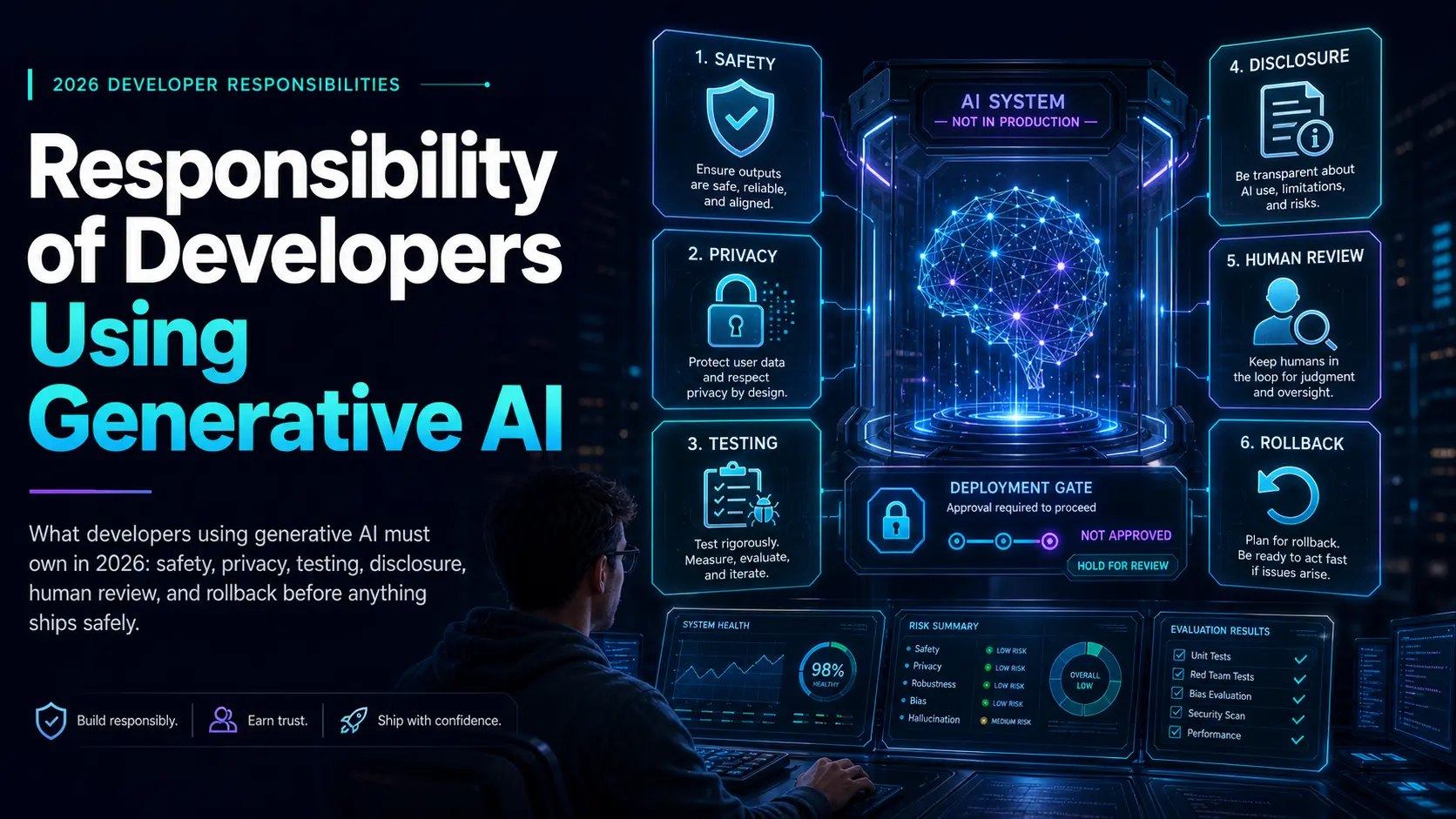
 What developers using generative AI must own in 2026: safety, privacy, testing, disclosure, human review, and rollback before anything ships safely.
 How-To
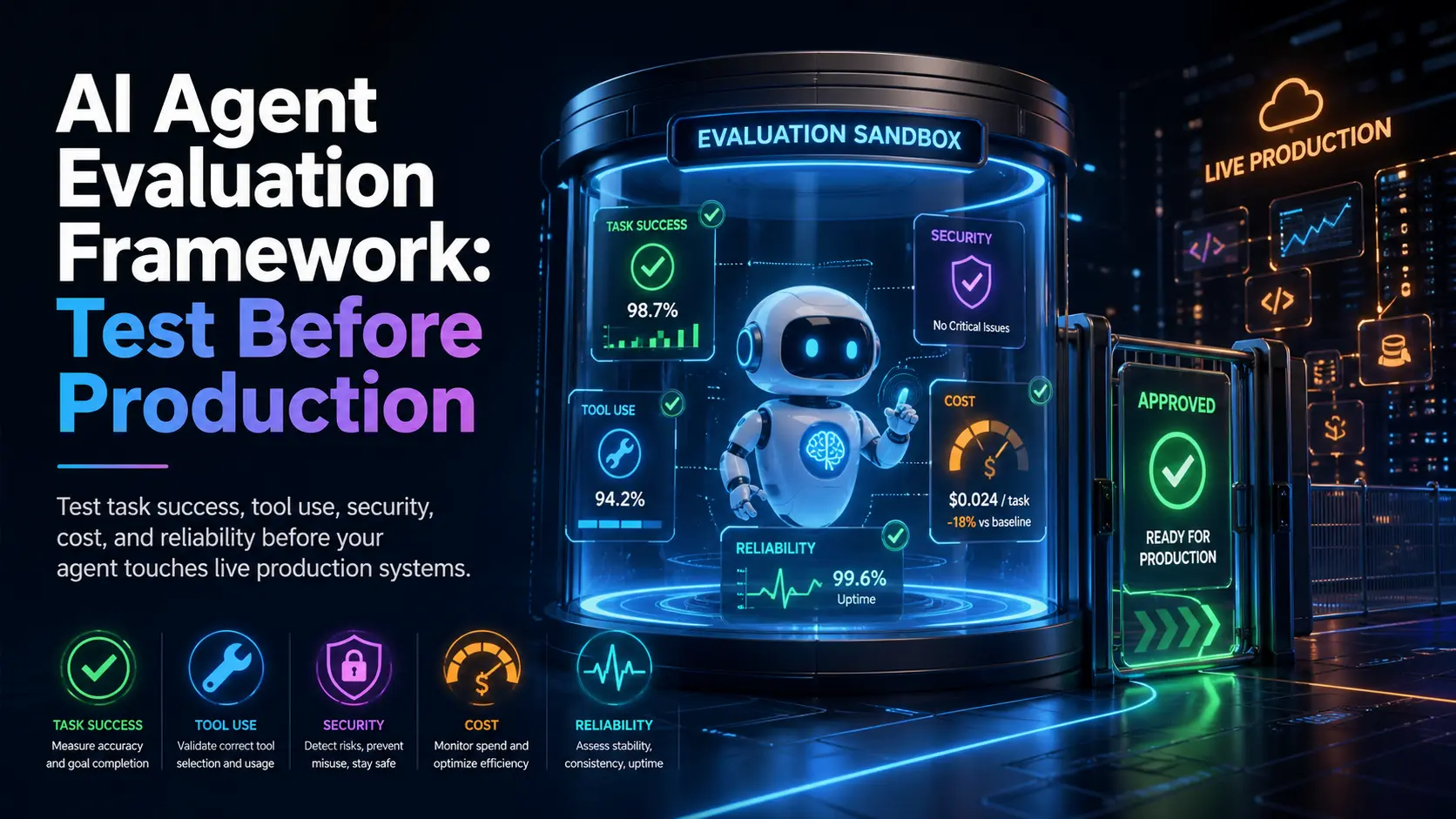
 AI agent evaluation framework for testing task success, tool use, security, cost, and reliability before your agent touches live production systems.
 AI Regulation
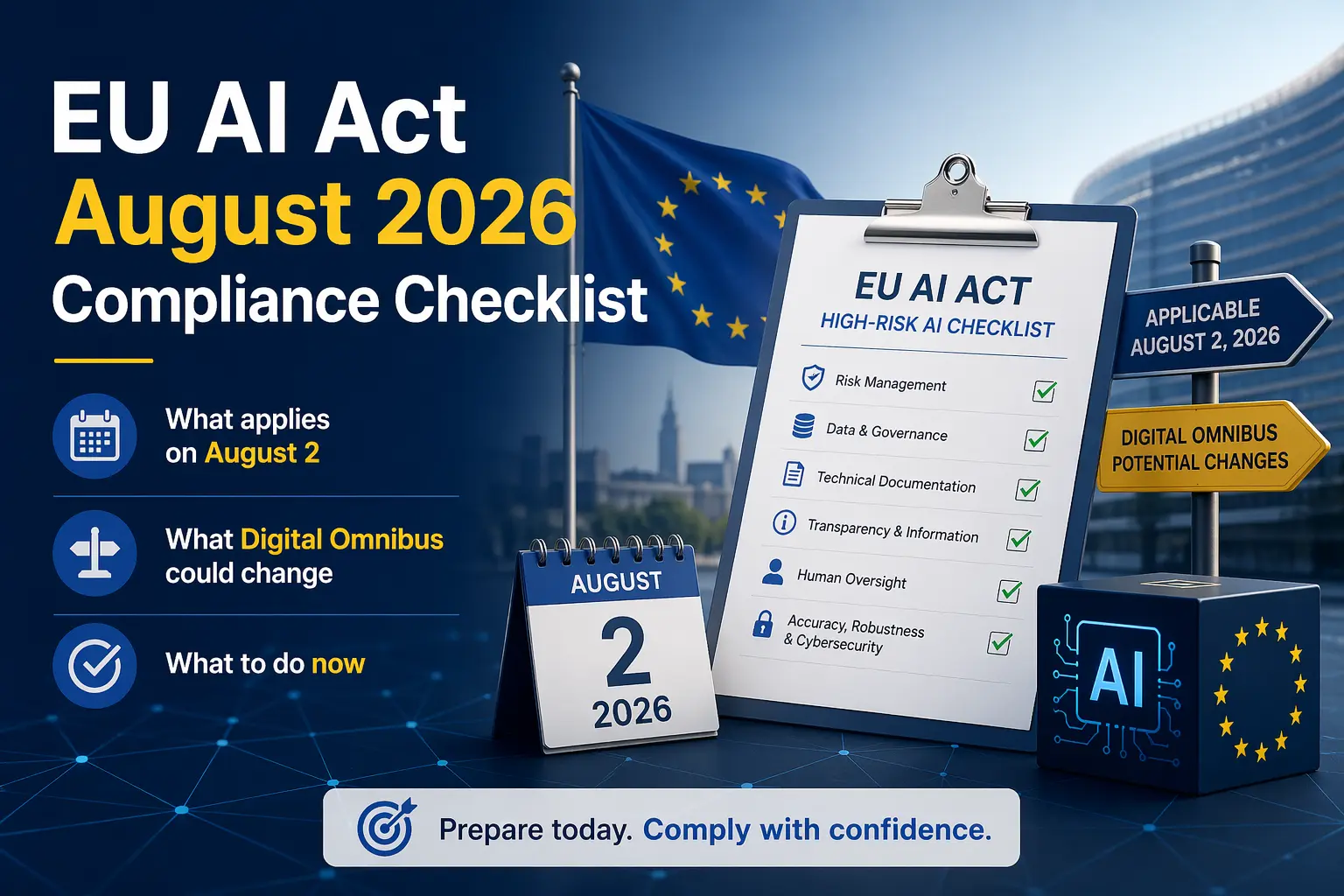
 EU AI Act August 2026 compliance checklist for high-risk AI teams. What applies on August 2, what Digital Omnibus could change, and what to do now.
 AI Regulation
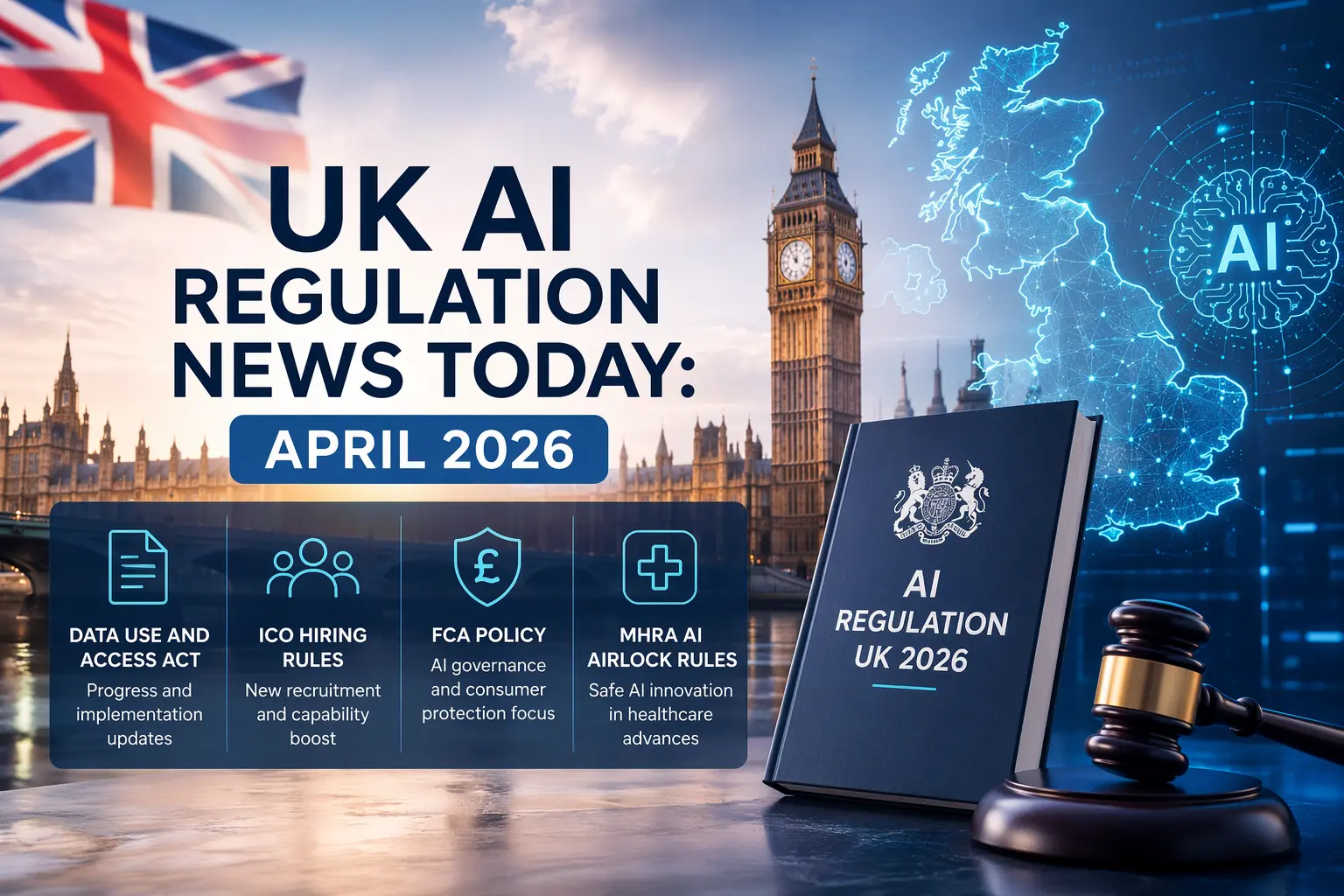
 UK AI regulation news today, explained. April 2026 updates on the Data Use and Access Act, ICO hiring rules, FCA policy, and MHRA AI Airlock rules.
 AI Tools
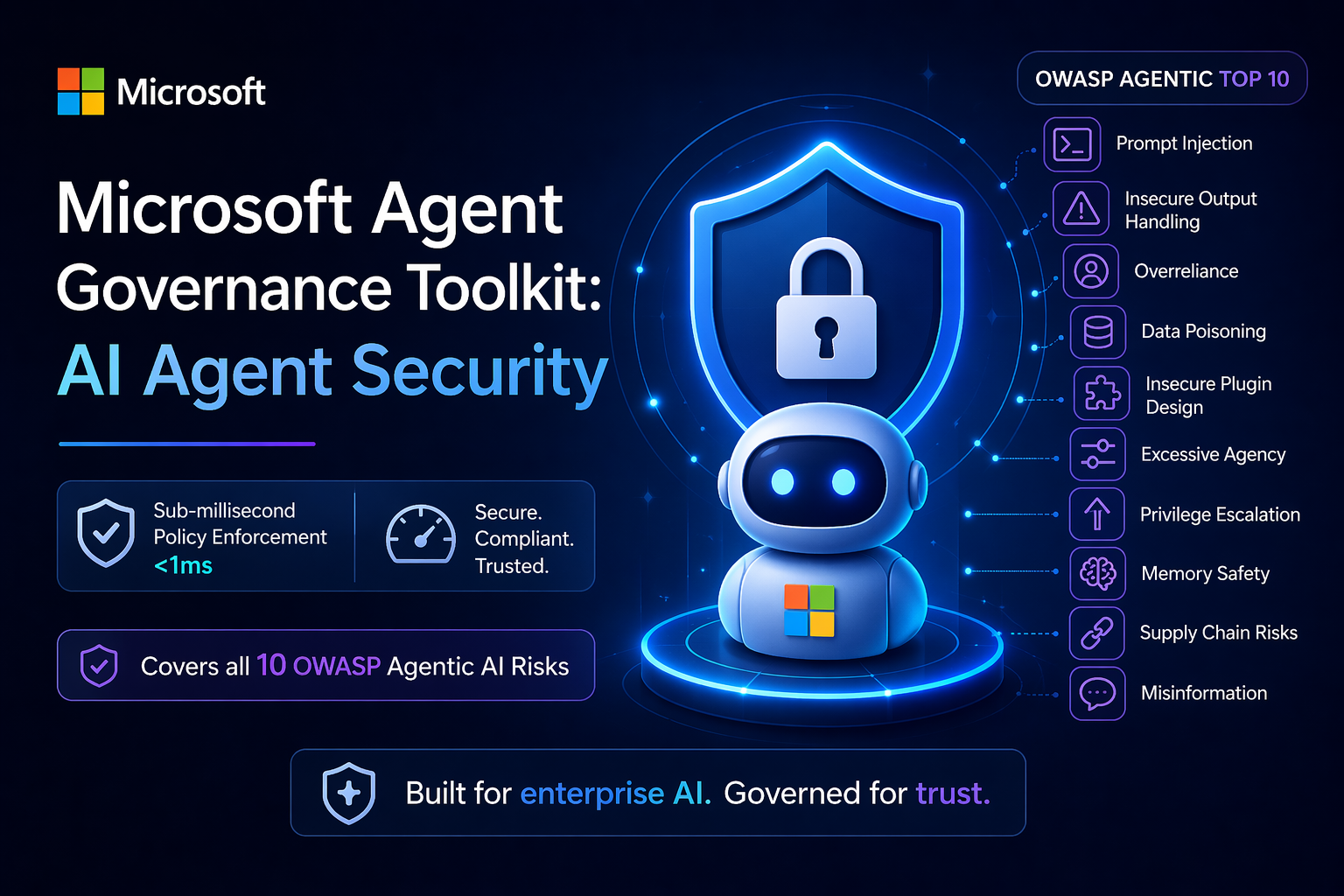
 Microsoft's Agent Governance Toolkit tackles all 10 OWASP agentic AI risks with sub-millisecond policy enforcement. Here's what it does and why it matters.
 AI Regulation
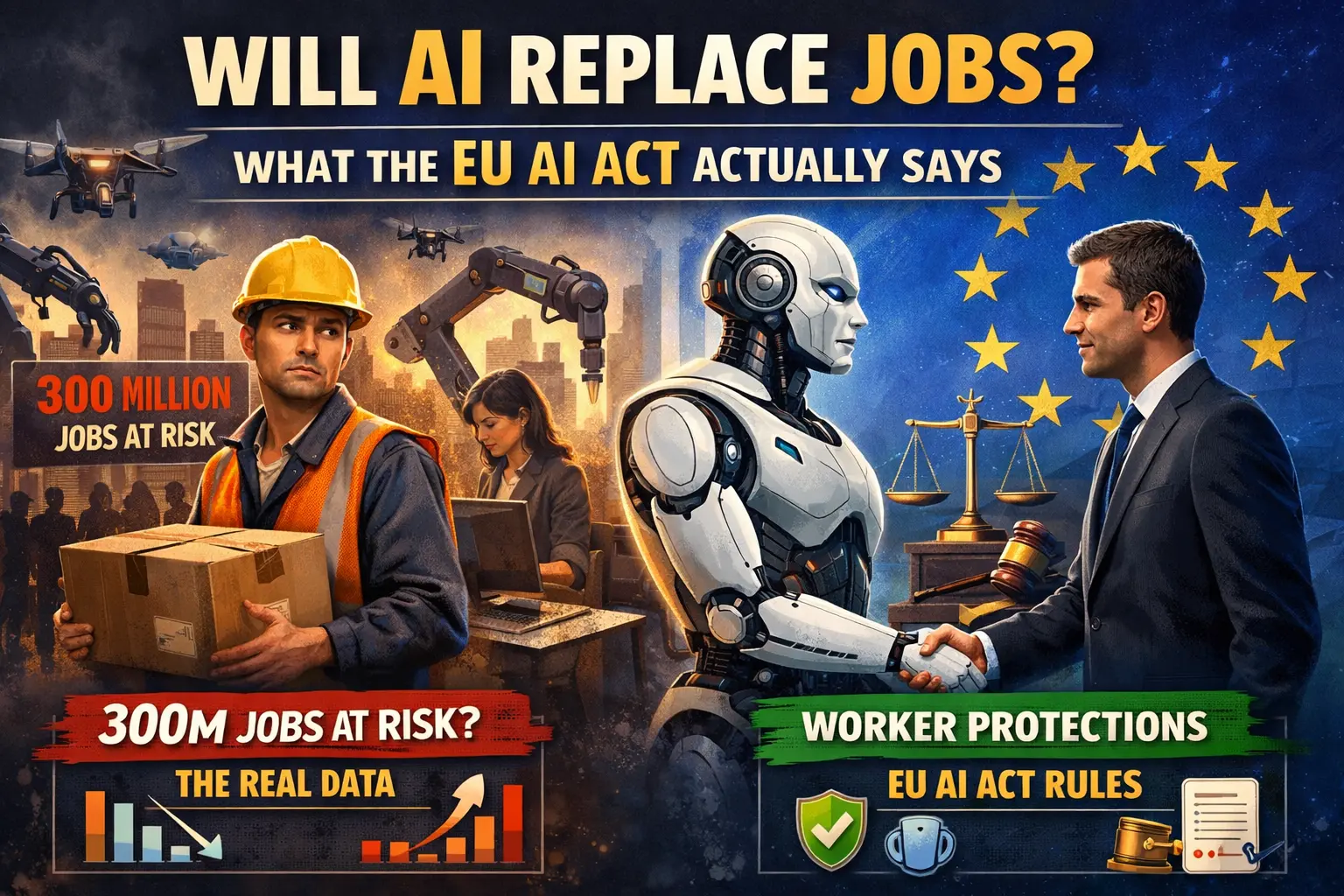
 AI could displace 300M jobs. But the EU AI Act has worker protections most companies miss. Here's what the data and August 2026 enforcement actually require.
 AI Regulation
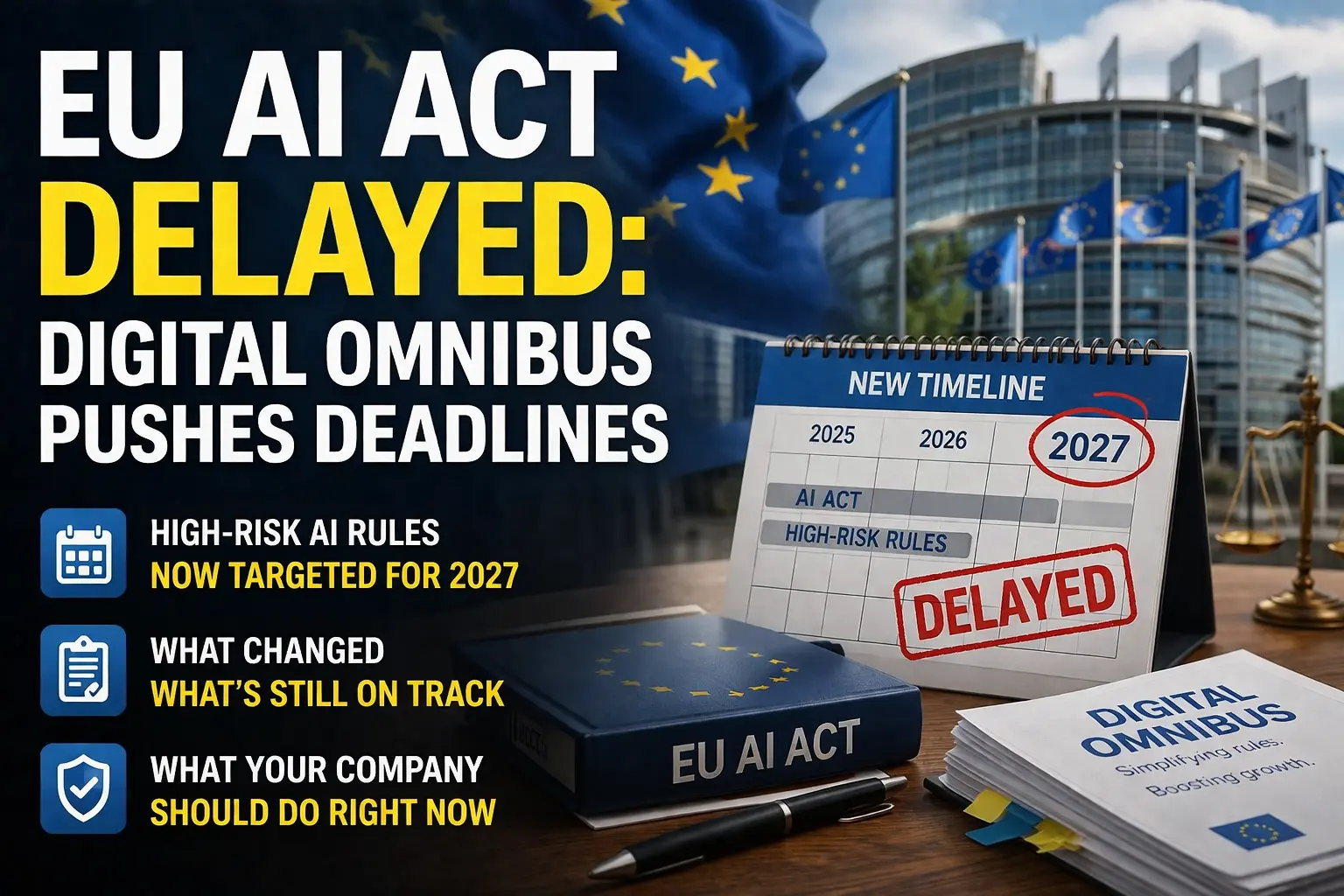
 Is the EU AI Act delayed to 2027? April 2026 enforcement status, Digital Omnibus timeline, what obligations apply now, and how to prepare before August 2026.
 News
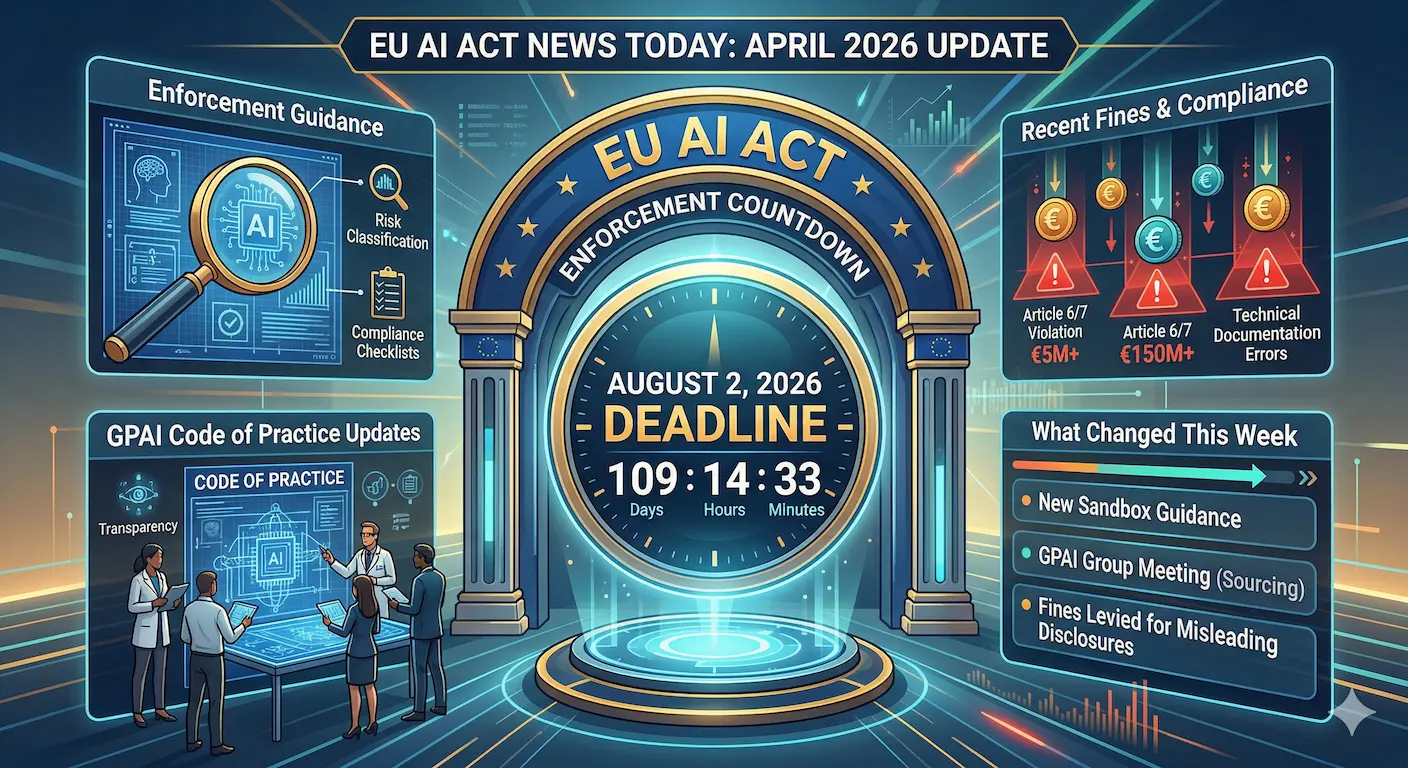
News The latest EU AI Act news for April 2026. New enforcement guidance, GPAI Code of Practice updates, fresh fines, and the August 2 deadline countdown - explained.
 AI Regulation
 Build an effective AI governance framework with 7 proven strategies for 2026. Covers compliance, risk management, and practical implementation steps.
 AI Regulation
 Key EU AI Act deadlines in 2026 explained. Learn which obligations take effect, what high-risk AI rules mean for your business, and how to prepare now.
 News
News How agentic AI is deployed in 2026 across enterprises: real-world use cases, the key risks teams hit, and what comes next for autonomous AI systems.
 AI Regulation
 EU AI Act enforcement begins in 2026. Get the latest updates on compliance timelines, high-risk AI rules, and what organizations must do to stay compliant.
 AI Regulation
 Japan shifts from AI-friendly policies to formal regulation in 2026. Learn about the AI Promotion Act, new governance frameworks, and what developers must know.