Topic Hub

AI Tools

Explore the AI tools AI News Desk covers most closely, from coding agents to search monitoring and assistants.

The AI Tools hub is the clean root-level version of the tools coverage on the site. It consolidates product roundups (ChatGPT vs Claude vs Gemini), coding-agent benchmarks (GPT-5.4 vs Claude Code vs Copilot), AI assistant comparisons, domain-specific models like GPT-Rosalind, and real-world usage guides. Groups buying-oriented content and tool releases into one place that ranks for high-intent keywords without relying only on taxonomy pages. Creates topical authority for tools coverage.

  • Surface the commercial tools coverage that was previously buried in category archives.
  • Group product news, comparisons, and buyer-oriented guides together.
  • Support clearer internal linking from tool articles and the homepage.

AI Tools: The 2026 Assistant & Agent Landscape

The AI tools market in 2026 is fractured into specialized categories: general-purpose assistants (ChatGPT, Claude, Gemini, Perplexity), coding agents (Claude Code, GitHub Copilot, Cursor), domain-specific models (GPT-Rosalind), and orchestration platforms. This guide consolidates current offerings, pricing, capabilities, and use-case matching to help teams evaluate which tools fit their workflow.

General-Purpose AI Assistants

The top four assistants control the majority of 2026 market share:

Claude by Anthropic

  • Latest Models: Claude Opus 4.8 (May 2026), Opus 4.6, Haiku 4.5
  • Context: 200K token context (Opus and Sonnet tiers)
  • Strengths: Strongest coding and reasoning benchmarks; lowest hallucination rate; excellent agentic capabilities; Claude Code integration
  • Use Cases: Research, complex coding, reasoning-heavy tasks, content generation, agent reasoning
  • Pricing: €2-3/M input tokens, €6-15/M output tokens (varies by tier)
  • Status: June 2026—Anthropic IPO in progress ($965B valuation); Claude Mythos (frontier model) in preview; dominant in engineering

ChatGPT by OpenAI

  • Latest Models: GPT-5.5 Instant (May 2026), GPT-5.5 Standard, GPT-5.4 Pro
  • Strengths: Fastest inference; native code execution (Code Interpreter); largest user base; extensive integrations
  • Use Cases: General Q&A, writing, coding assistance, brainstorming, customer-facing applications
  • Pricing: GPT-5.5 Instant $0.03/M input, $0.12/M output (cheapest frontier model); higher tiers available
  • Status: Dominant in consumer and SMB; strong enterprise penetration post-sandbox release

Gemini by Google

  • Latest Models: Gemini 3.5 Pro (May 2026), Gemini Spark (24/7 cloud agent)
  • Strengths: Multimodal (image/video input); deep integration with Google services; fast inference; Spark offers continuous agent
  • Use Cases: Multimodal analysis, Google Workspace integration, customer support, research, document analysis
  • Pricing: Gemini 1.5 Pro €2/M input (first 1M free), €4/M output; Spark free tier + €20/month for 24/7
  • Status: Growing rapidly; Spark launch (May 2026) signals Google's pivot toward agentic AI

Perplexity

  • Architecture: Proprietary multi-model hybrid with real-time web search
  • Strengths: Real-time web search baked in; fast responses; fresh information; superior fact-checking
  • Use Cases: Research, fact-checking, real-time news analysis, brand monitoring, competitive intelligence
  • Pricing: Pro €20/month (~€0.01-0.02 per query effective cost)
  • Status: Fastest-growing for search and brand monitoring; limited coding capabilities

Comparison Table

Feature Claude ChatGPT Gemini Perplexity
Context Length 200K 128K 1M 100K
Speed (ms) 500-800 300-500 400-600 400-700
Coding Ability Strongest Strong Strong Limited
Web Search No Yes (Plus) Yes Yes (Native)
Multimodal Image Image, Video Image, Video Image
Mobile App Yes Yes Yes Yes
Pricing (Base) €2/M $0.03/M Free tier Free tier
Best For Reasoning, Coding Speed, Scale Multimodal Search, Fresh Data

Coding Agents & Development Tools

Coding agents have emerged as the fastest-growing category in 2026:

Claude Code

  • Release Date: January 2026
  • Architecture: Claude models + agentic scaffolding + native MCP integration
  • Strengths: Consistently top-tier on real-repository coding benchmarks; strong multi-file reasoning
  • Features: Autonomous code review, refactoring, debugging, file management, git operations
  • Pricing: Included with Claude Pro (€20/month) or API usage (Claude Opus pricing)
  • Status: Winning engineering mindshare; preferred for multi-agent development workflows

GitHub Copilot

  • Latest Update: Token-based billing (June 2026 change from seat-based)
  • Models: GPT-5.4 primary; Claude Code available (preview)
  • Strengths: Seamless IDE integration (all major IDEs); fast; lower cost per completion than seat-based
  • Limitations: Less agentic than Claude Code; no autonomous refactoring; relies on IDE plugins
  • Pricing: €10/month (standard, 1000 tokens/day); €20/month (unlimited tokens)
  • Status: Widest IDE coverage globally; maintaining market share through ubiquity

Cursor

  • Latest: Composer mode + Tab mode; integrates Claude Opus 4.8
  • Strengths: Best IDE experience for agentic coding; natural conversation flow; multi-file edits
  • Limitations: Closed-source; VS Code-only; not integrated with external tools like GitHub
  • Pricing: Free tier (50 fast requests/month); Pro €20/month
  • Status: Rapidly growing; winning among indie developers and startups

Codex by OpenAI

  • Status: Internal at OpenAI; newly available via Ona acquisition (June 2026)
  • Features: Autonomous cloud agent for repository scanning, refactoring, commit analysis
  • Availability: Limited; will expand post-acquisition closure

Comparison: Coding Agents

Tool Strengths IDE Support Agentic Pricing Tier
Claude Code Multi-file agentic work, terminal + repo context CLI, VS Code, JetBrains, web Yes Subscription or API usage
GitHub Copilot IDE ubiquity, inline completion All major Partial Per-seat subscription
Cursor Editor-native agent workflows Standalone (VS Code fork) Yes Free tier + subscription
Codex Cloud agents, repo-history awareness Cloud + CLI Yes Bundled with ChatGPT plans

Domain-Specific Models

In 2026, specialized models are emerging for high-value domains:

GPT-Rosalind (OpenAI, April 2026)

  • Domain: Drug discovery and life sciences
  • Features: Molecule design, virtual screening, biomarker prediction
  • Restrictions: Early access only; restricted to qualified research and pharma teams
  • Status: OpenAI's first domain-specific model; signals broader specialization trend

Gemma 4 (Google, April 2026)

  • Type: Open-weights foundation model with mixture-of-experts architecture
  • Size: 27B (base), up to 1.6T with MoE
  • Strengths: Open-source and permissive license; competitive with Claude Opus 4.6 on coding; downloadable
  • Availability: Download and run locally; no cloud API
  • Status: Popular for on-premises and privacy-sensitive deployments

Llama 3.2 & Variants (Meta)

  • Type: Open-weights, MIT-permissive license
  • Strengths: Fast, cheap, suitable for resource-constrained environments
  • Limitations: Less capable than Claude/GPT-5.5 on reasoning tasks
  • Status: Dominant in open-source ecosystem; widely fine-tuned for domain-specific tasks

Pricing Comparison & Total Cost of Ownership

Monthly Subscription Tier (Consumer/Pro)

  • Claude Pro: €20/month (unlimited API calls via Claude.com web interface)
  • ChatGPT Plus: $20/month (GPT-5.5 access)
  • Perplexity Pro: €20/month (unlimited searches, higher query limits)
  • Cursor Pro: €20/month (150 fast requests/month)
  • GitHub Copilot: €10-20/month (token-based as of June 2026)

API Pricing (Per-Token)

  • Claude Opus 4.8: €2/M input, €9/M output
  • GPT-5.5 Instant: $0.03/M input, $0.12/M output (cheapest frontier model)
  • Gemini 1.5 Pro: €2/M input, €4/M output
  • Llama 3.2 (via cloud): €0.05-0.30/M tokens

Total Cost Estimation For a team of 10 engineers using coding agents 8 hours/day, 250 work days/year:

  • Claude Code: €20 × 10 = €200/month (~€2,400/year)
  • GitHub Copilot + Claude Pro: €20 + €20 × 10 = €400/month (~€4,800/year)
  • Cursor: €20 × 10 = €200/month (~€2,400/year)
  • In-house Llama 3.2 on GPU: €5K infrastructure + €1K/month ops (~€17K/year)

Use-Case Matching Guide

If you need: Best choice

  • Fastest response: GPT-5.5 Instant or Perplexity
  • Best coding: Claude Code or Cursor
  • Agentic workflow: Claude Code (with LangGraph)
  • Web search/fresh data: Perplexity or ChatGPT Plus
  • Multimodal analysis: Gemini or Claude (image only)
  • Open-source/on-premises: Llama 3.2 or Gemma 4
  • Domain-specific (biotech): GPT-Rosalind (if access granted)
  • Lowest cost per token: GitHub Copilot or Llama API
  • Enterprise/audit: Claude Code (via API) with full logging

Emerging Trends in 2026

  1. Agentic Shift: Industry moving from chat interfaces to agent orchestration and automation platforms
  2. Specialization: Domain-specific models like GPT-Rosalind will expand; biotech, finance, law next
  3. Open-Weights Growth: Llama, Gemma, and community variants closing capability gap with frontier models
  4. Token Billing: GitHub Copilot's June 2026 shift to tokens signals industry movement away from per-seat pricing
  5. Multimodal Maturity: Image, video, and audio input becoming baseline expectations

Related Topics

FAQ

Q: Should I use Claude Code or GitHub Copilot for my team? A: Claude Code for complex agentic workflows where the assistant plans, edits multiple files, and runs tests autonomously. GitHub Copilot for IDE ubiquity and a lower per-seat cost. Both are solid; choice depends on workflow complexity.

Q: Is GPT-5.5 Instant really cheaper than Claude? A: Yes on tokenization. GPT-5.5 Instant: $0.03/M input; Claude Opus: €2/M. Claude wins on reasoning quality and hallucination.

Q: Can I run Llama 3.2 locally? A: Yes. Single 80GB GPU (RTX 6000, €15K) can run 70B model with ~500ms latency. Cost-effective for teams >100 engineers. Smaller teams: API is cheaper.

Q: What is Claude Code vs. Claude API? A: Claude Code is Claude (model) + agentic scaffolding for file management and tool coordination. Claude API is the model alone; you handle orchestration. For autonomous workflows, Claude Code saves engineering effort.

Latest Coverage

Canonical coverage grouped under one topic.
GitHub Copilot Token Billing: What Changed June 1
AI Tools

GitHub Copilot Token Billing: What Changed June 1

GitHub Copilot switched to token-based billing on June 1. I break down what each plan gets, which models drain credits fastest, and how to keep costs low.
Claude Opus 4.8: The New Coding Record, Tested
AI Tools

Claude Opus 4.8: The New Coding Record, Tested

Claude Opus 4.8 hit 69.2% on SWE-bench Pro and a 1890 GDPval Elo. I break down the benchmarks, Fast mode, and parallel subagents—what actually matters.
Gemini Spark: Inside Google's 24/7 Personal AI Agent
AI Tools

Gemini Spark: Inside Google's 24/7 Personal AI Agent

Google's new Gemini Spark is a 24/7 cloud AI agent that runs on Google Cloud VMs. I break down what it does, the limits, and who should subscribe.
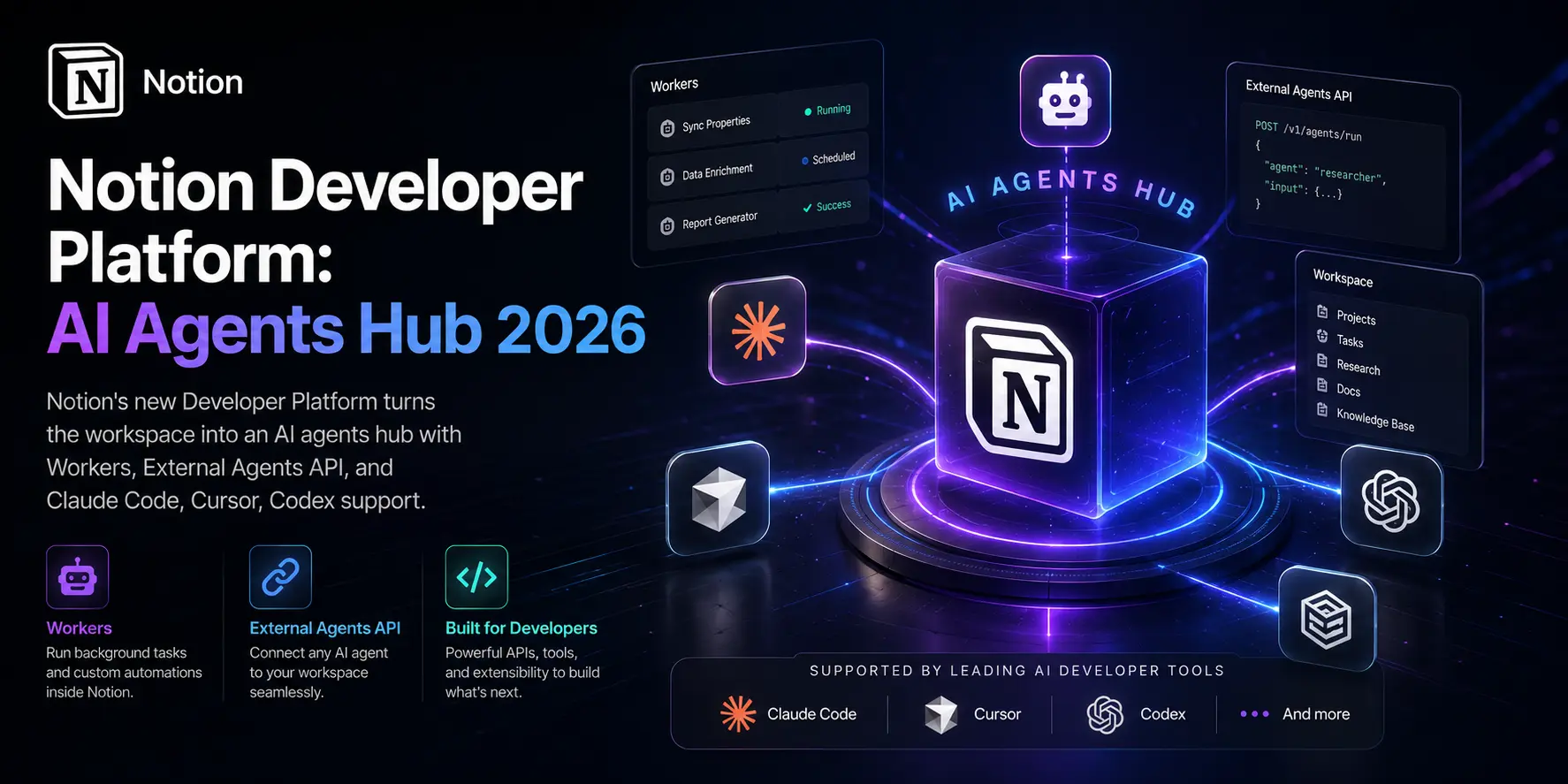
Notion Developer Platform: AI Agents Hub 2026
AI Tools

Notion Developer Platform: AI Agents Hub 2026

Notion's new Developer Platform turns the workspace into an AI agents hub with Workers, External Agents API, and Claude Code, Cursor, Codex support.
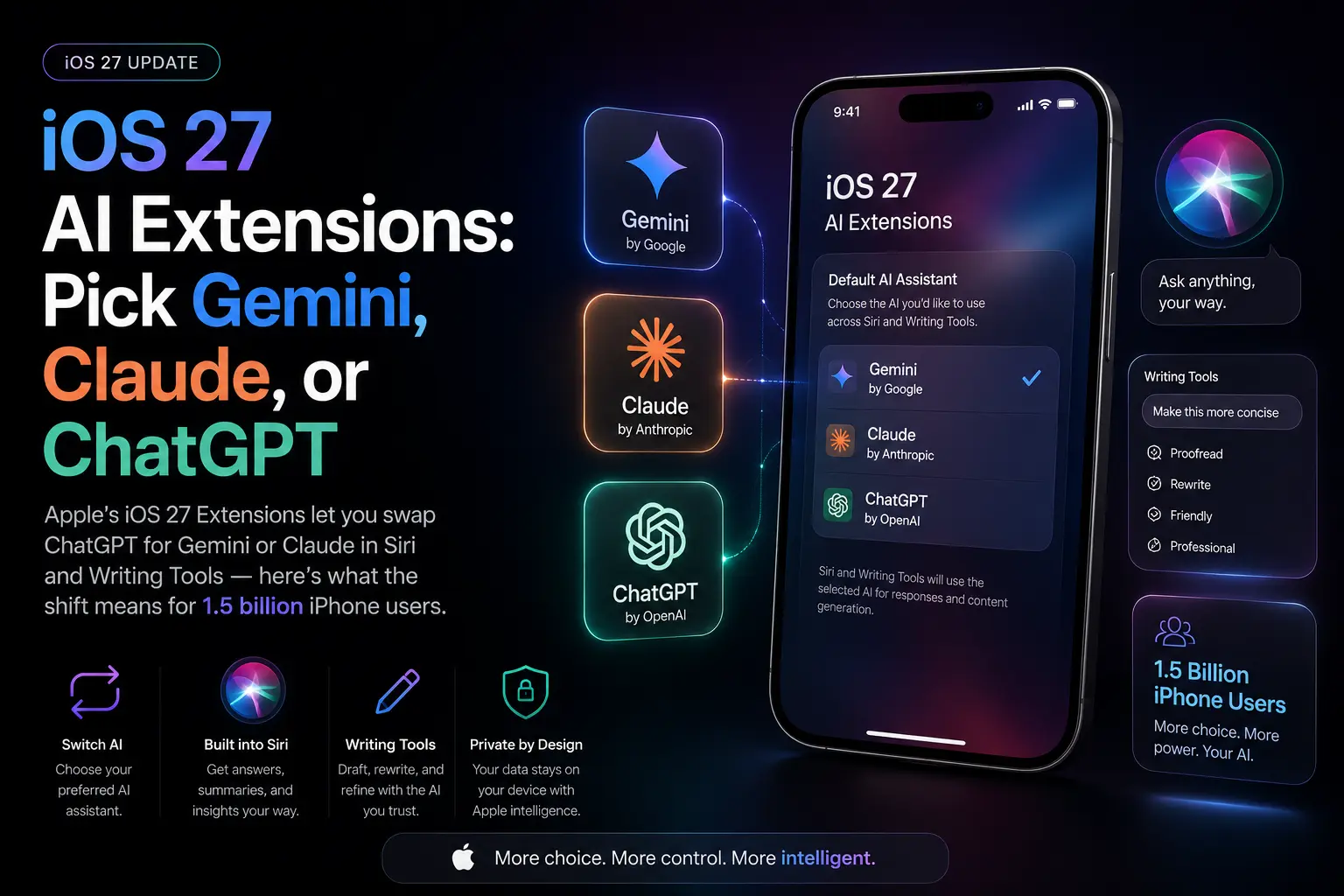
iOS 27 AI Extensions: Pick Gemini, Claude, or ChatGPT
News

iOS 27 AI Extensions: Pick Gemini, Claude, or ChatGPT

Apple's iOS 27 Extensions let you swap ChatGPT for Gemini or Claude in Siri and Writing Tools — here's what the shift means for 1.5 billion iPhone users.
GPT-5.5 Instant: What Changed for ChatGPT Users
News

GPT-5.5 Instant: What Changed for ChatGPT Users

GPT-5.5 Instant is now ChatGPT's default model. Here's what actually changed—52% fewer hallucinations, Gmail memory, and real benchmark gains explained.
Claude Dreaming: Anthropic's New Agent Memory Feature
AI Tools

Claude Dreaming: Anthropic's New Agent Memory Feature

Anthropic's May 2026 update gives Claude agents memory that gets better between sessions. I break down dreaming, outcomes, and multiagent orchestration.
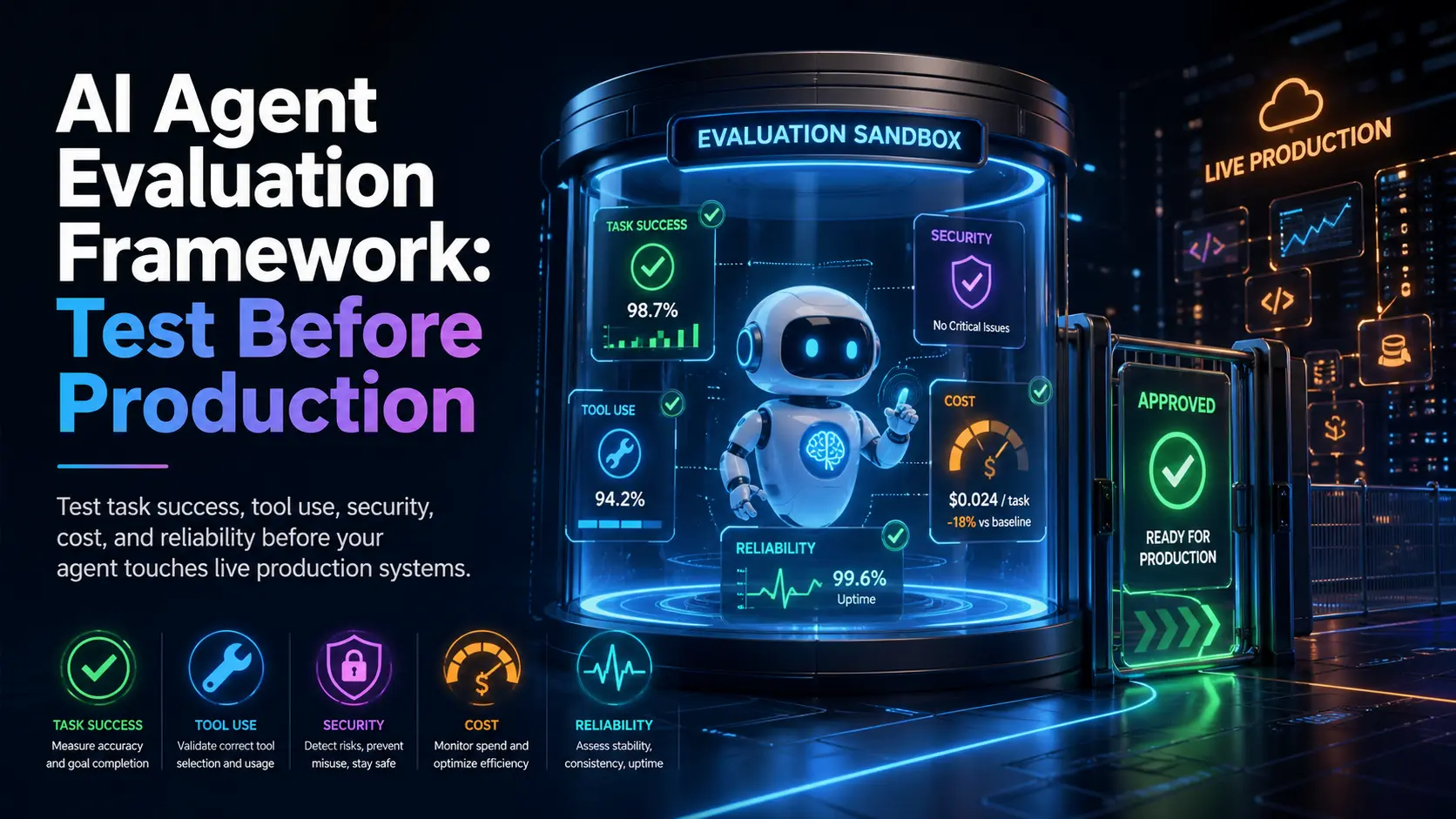
AI Agent Evaluation Framework: Test Before Production
How-To

AI Agent Evaluation Framework: Test Before Production

AI agent evaluation framework for testing task success, tool use, security, cost, and reliability before your agent touches live production systems.

DeepSeek V4 Pro: Open Frontier AI at 1/10 the Cost
News

DeepSeek V4 Pro: Open Frontier AI at 1/10 the Cost

DeepSeek V4 Pro shipped on April 24 with 1.6T open weights, a 1M token context, and a Codeforces 3206 rating — at one-tenth the cost of Opus 4.7.
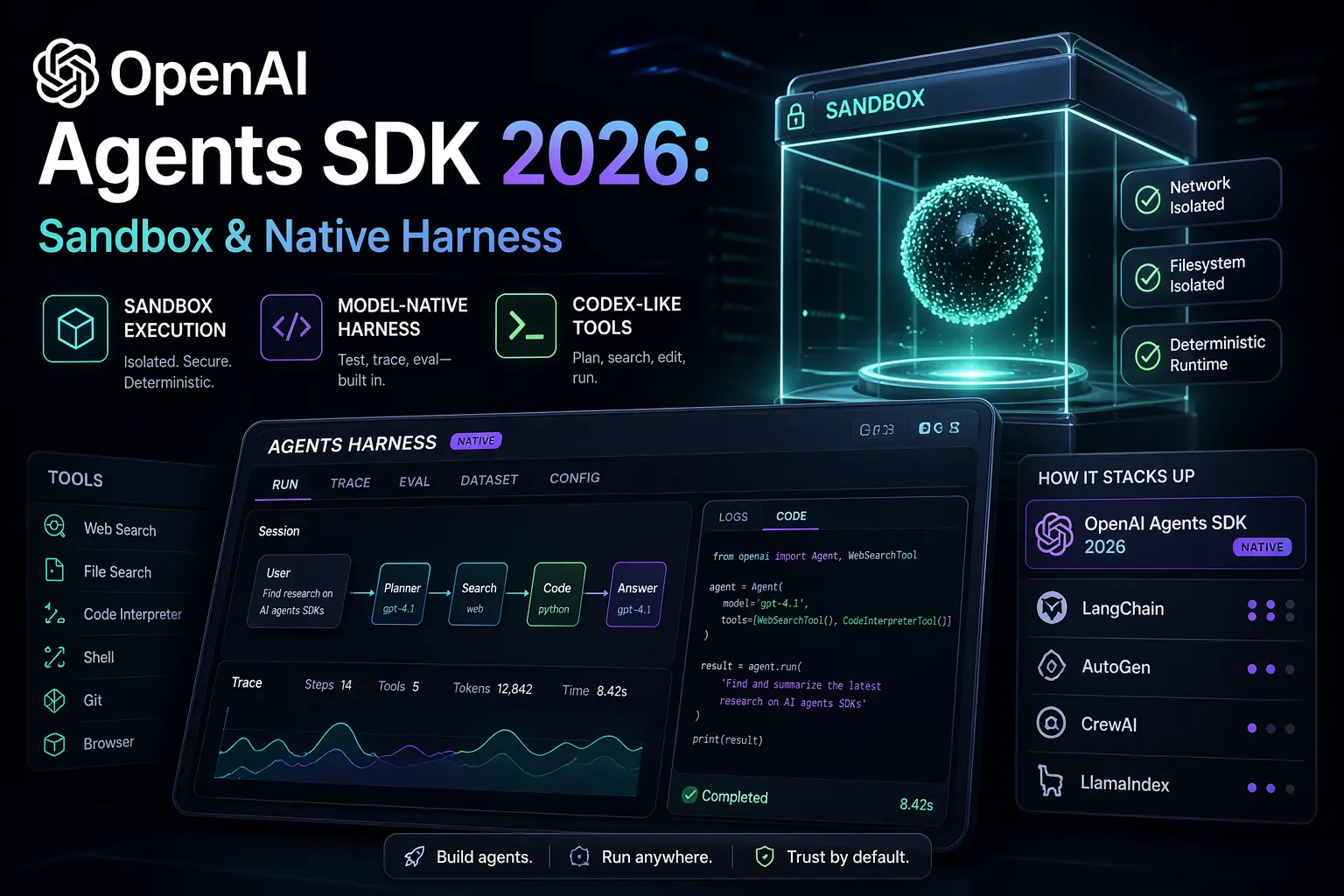
OpenAI Agents SDK 2026: Sandbox & Native Harness
AI Tools

OpenAI Agents SDK 2026: Sandbox & Native Harness

OpenAI's Agents SDK update ships sandbox execution, a model-native harness, and Codex-like tools. Here's what changed and how it compares to rivals.

GPT-Rosalind: OpenAI's AI for Drug Discovery
AI Tools

GPT-Rosalind: OpenAI's AI for Drug Discovery

GPT-Rosalind is OpenAI's first domain-specific model for life sciences and drug discovery. Learn what it does, who gets early access, why restricted.
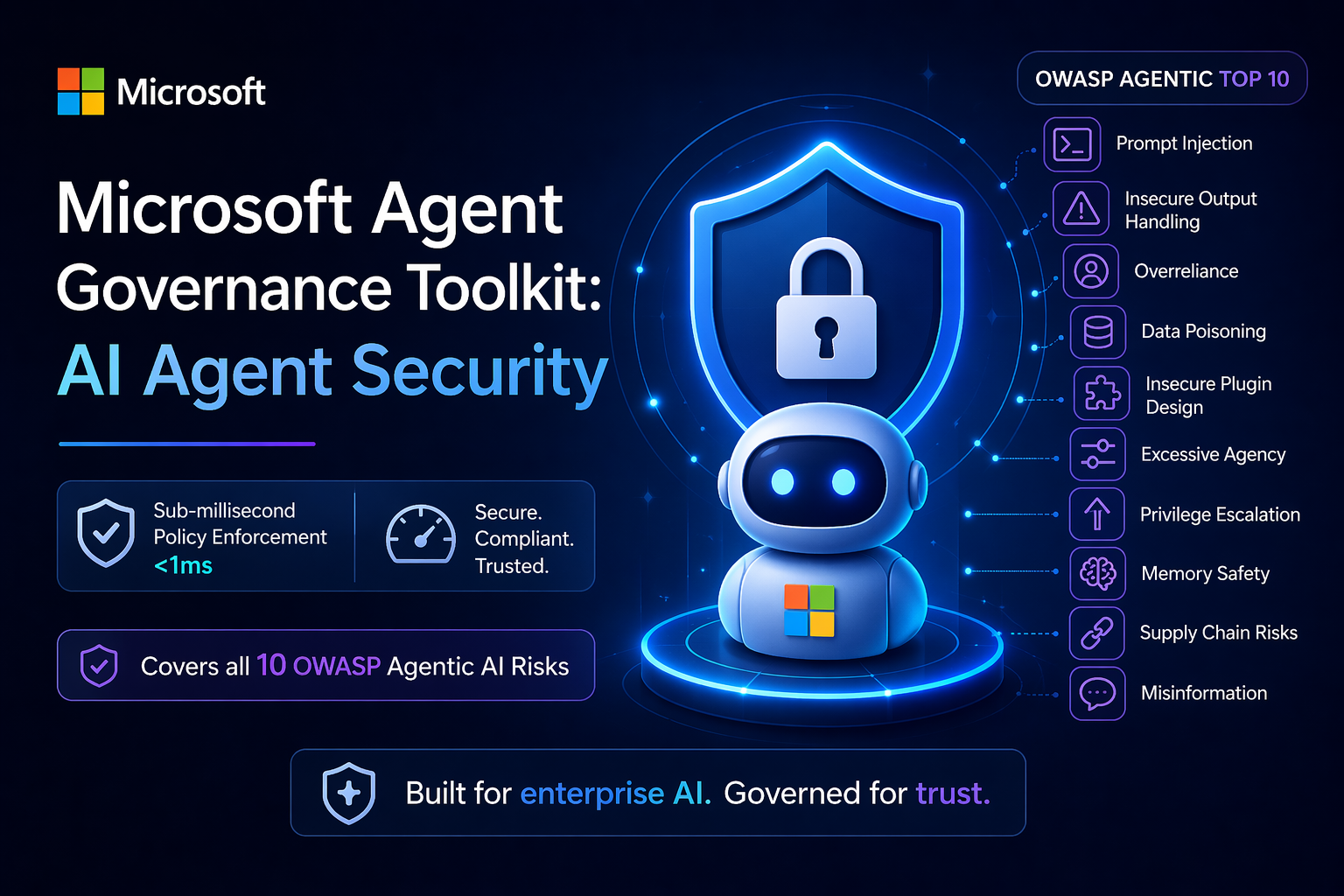
Microsoft Agent Governance Toolkit: AI Agent Security
AI Tools

Microsoft Agent Governance Toolkit: AI Agent Security

Microsoft's Agent Governance Toolkit tackles all 10 OWASP agentic AI risks with sub-millisecond policy enforcement. Here's what it does and why it matters.
Best AI Search Monitoring Tools 2026: Tested & Compared
AI Tools

Best AI Search Monitoring Tools 2026: Tested & Compared

I tested 10 AI search monitoring tools for tracking brand visibility. Here's what works for ChatGPT, Perplexity, and Google AI Overviews in 2026.
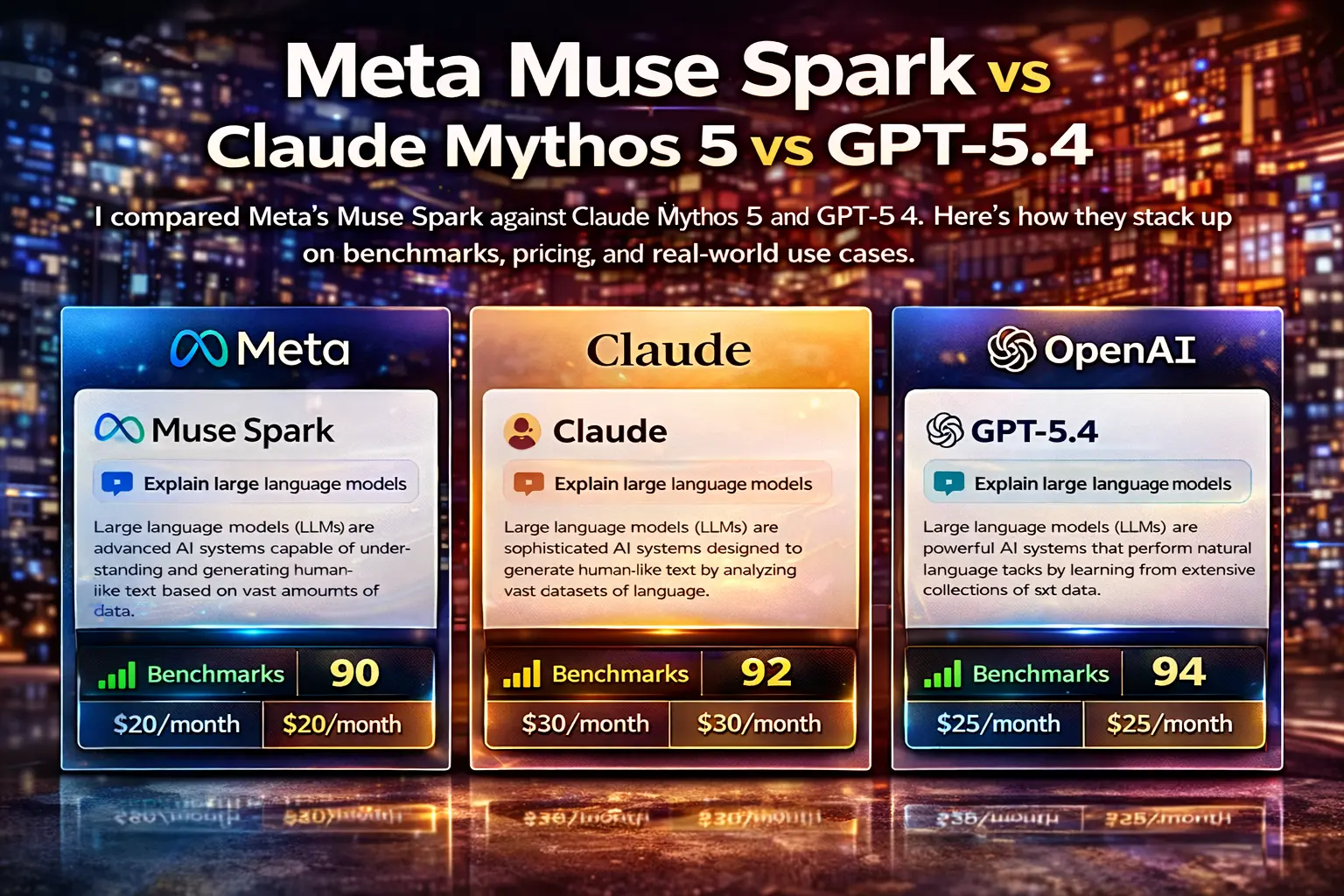
Muse Spark vs GPT-5.5 vs Claude Mythos
News

Muse Spark vs GPT-5.5 vs Claude Mythos

April 2026 comparison of Meta Muse Spark, OpenAI GPT-5.5, and Claude Mythos Preview: what is official, what is restricted, and what developers can use.
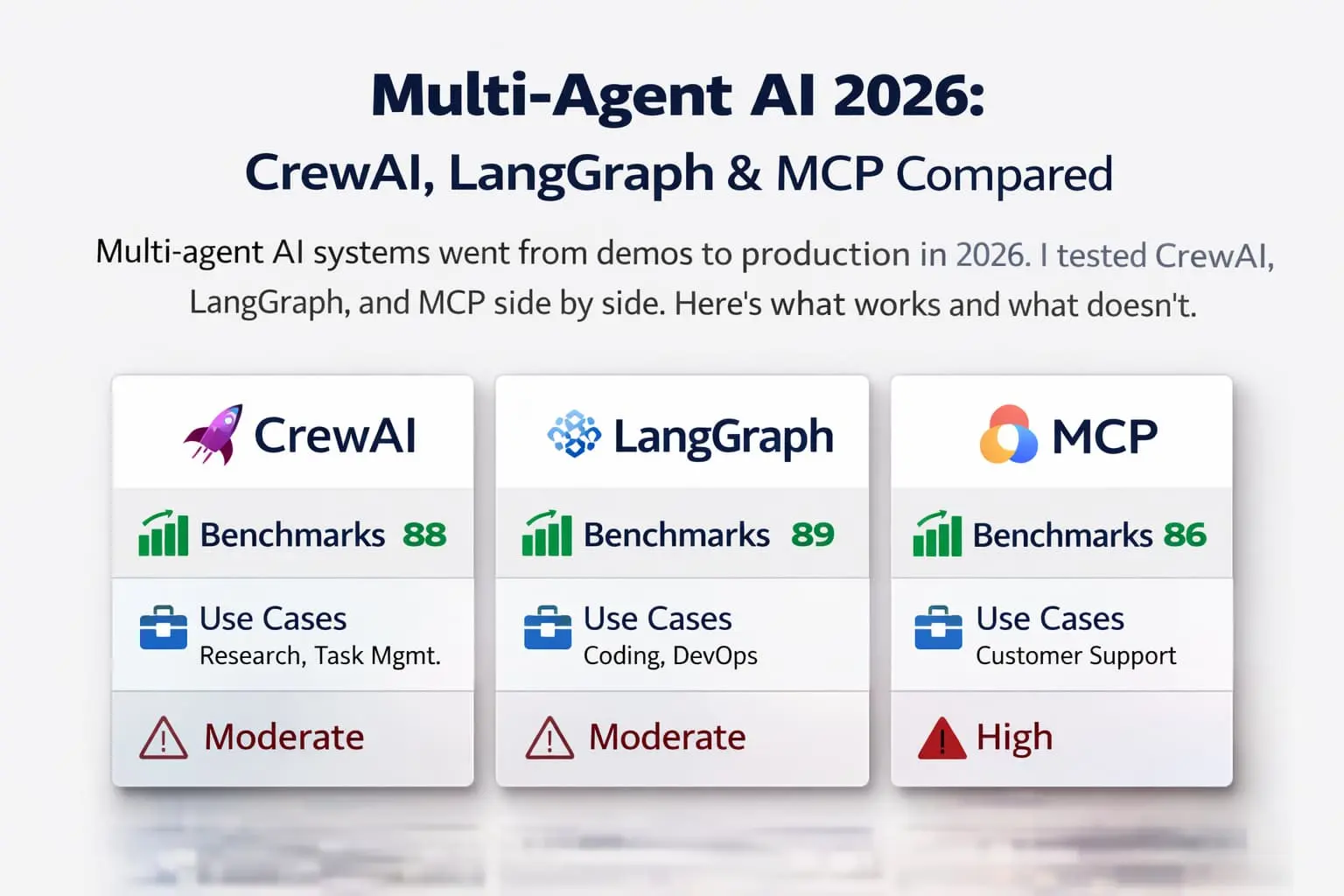
CrewAI vs LangGraph vs MCP: Multi-Agent AI 2026
AI Tools

CrewAI vs LangGraph vs MCP: Multi-Agent AI 2026

CrewAI vs LangGraph vs MCP in 2026 for building multi-agent systems: which framework to pick, what changed in MCP, and the tradeoffs that decide it.

Gemma 4 vs Opus 4.6, GPT-5.4 Pro, Gemini 3 Pro
News

Gemma 4 vs Opus 4.6, GPT-5.4 Pro, Gemini 3 Pro

Google's Gemma 4 just landed. I compared it head-to-head with Claude Opus 4.6, GPT-5.4 Pro, and Gemini 3.1 Pro. Here's what changes for the AI race.
Claude Mythos: What Anthropic Has and Hasn't Confirmed
News

Claude Mythos: What Anthropic Has and Hasn't Confirmed

Claude Mythos is one of the most discussed AI model stories of 2026. What Anthropic has confirmed, what remains unverified, and how to read the reports.
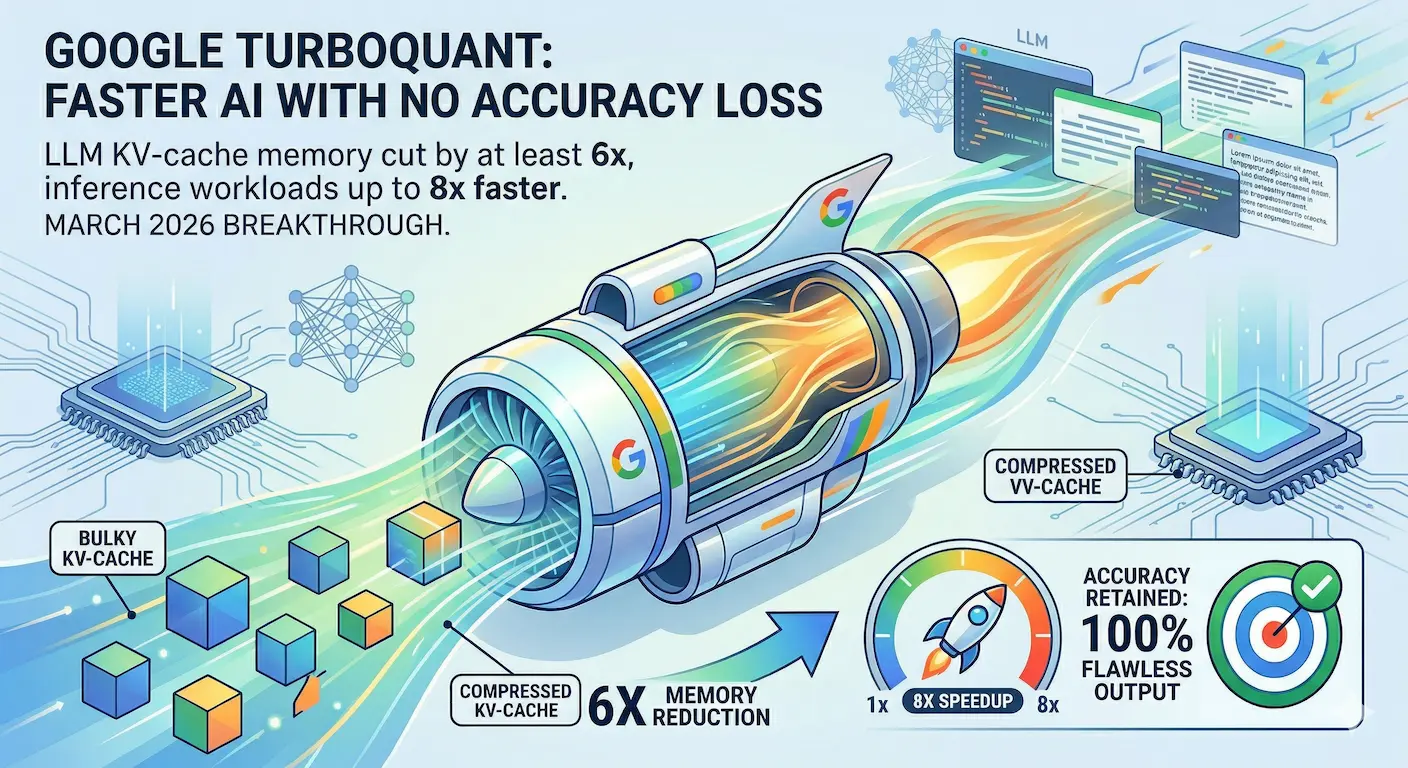
Google TurboQuant: Faster AI With No Accuracy Loss
News

Google TurboQuant: Faster AI With No Accuracy Loss

Google TurboQuant cuts LLM KV-cache memory by at least 6x and speeds some inference workloads up to 8x. Here's what the March 2026 breakthrough means.

AI Coding Agents 2026: GPT-5.4, Claude Code & Dev Tools
AI Tools

AI Coding Agents 2026: GPT-5.4, Claude Code & Dev Tools

AI coding agents moved beyond autocomplete in 2026. GPT-5.4 ships native computer use, Claude Code beats Copilot, and Codex scans commits autonomously.
AutoGPT vs BabyAGI vs Jarvis Compared 2026
AI Tools

AutoGPT vs BabyAGI vs Jarvis Compared 2026

Compare AutoGPT, BabyAGI, and Microsoft Jarvis (HuggingGPT) in 2026. See how each autonomous AI agent works, their strengths, and which fits your use case.

Top AI Finance Tools in 2026: AP, FP&A, Audit and Treasury
AI Tools

Top AI Finance Tools in 2026: AP, FP&A, Audit and Treasury

A practical 2026 guide to AI finance tools across accounts payable, audit, FP&A, spend control, tax, and reporting—based on current vendor pricing.

Best AI Assistants in 2026: Which One Fits Your Workflow?
AI Tools

Best AI Assistants in 2026: Which One Fits Your Workflow?

A practical 2026 guide to ChatGPT, Claude, Gemini, Copilot, Perplexity, Notion AI, Grammarly, and Jasper based on current pricing and workflow fit.